Two numbers landed on the portals this spring, and both are technically correct. Redfin put the Solana Beach median sale price at $2.8M over the three months ending April 2026, up 62.8% year over year, with homes going into contract in 17 days instead of 28. Zillow's home-value index, calibrated differently, has the average Solana Beach home at roughly $2.03M, down 2.2% over the same twelve months.
A buyer reading one of those numbers and not the other walks into offers with the wrong model of the market. Both are describing the same 3.5 square miles, and neither is wrong. What they are picking up, separately, is that Solana Beach is not one market. It is three, closing at different velocities, and the median is a weighted average of products a buyer will never own together.
Three products, one median
The condo corridor along South Sierra Avenue is the loudest voice in the sale mix. Nine gated complexes sit along the blufftop between Fletcher Cove and the Del Mar line, most of them built in the early to mid-1970s. Seascape Sur alone has 188 units. Del Mar Beach Club has 192. Del Mar Shores Terrace has 86. Add Surfsong, Seascape Shores, Solana Beach & Tennis Club, and the smaller Las Brisas, Playa Del Mar, and Solana Skybluff, and you have several hundred oceanfront and ocean-close units that trade regularly and set the aspirational tone of any given quarter.
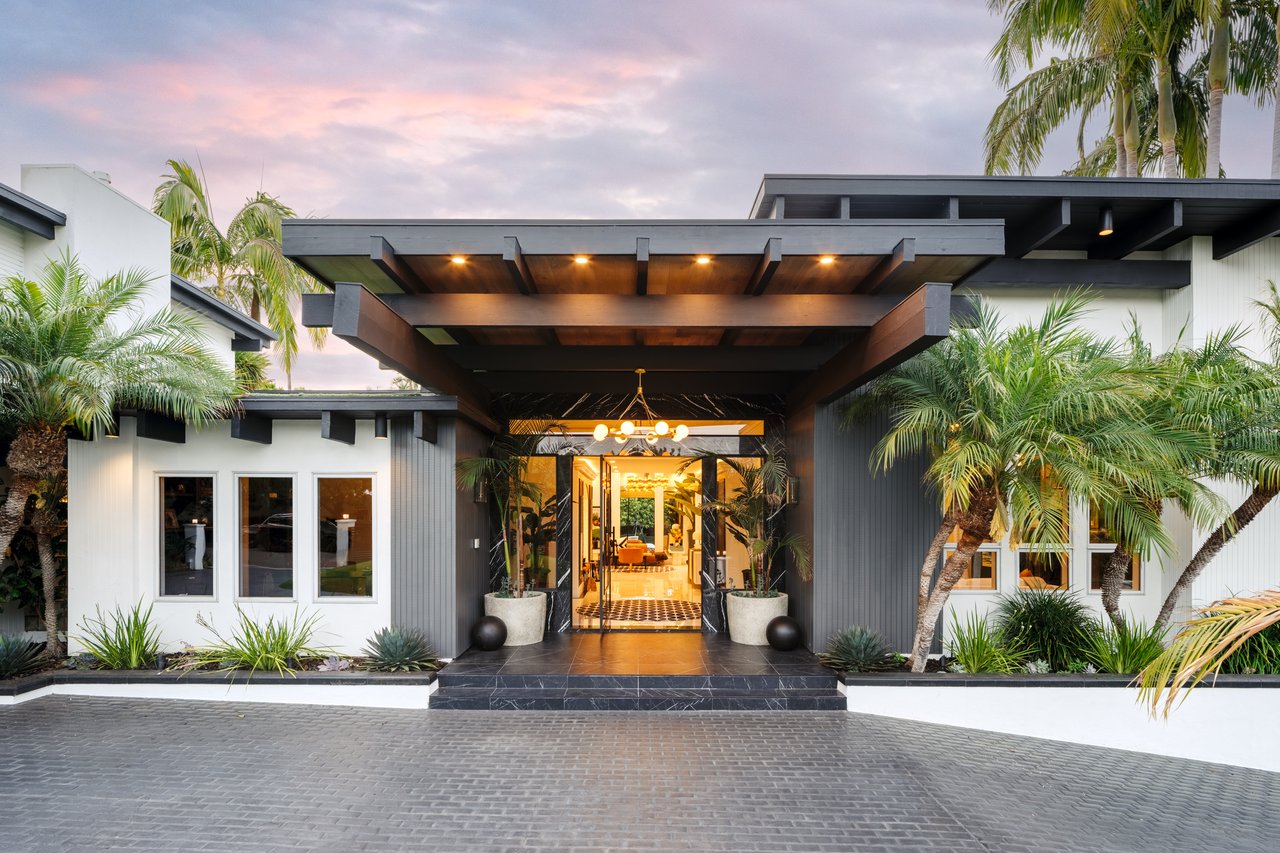
West of I-5 but east of the bluff, the neighborhoods around Cedros, Olde Solana Beach, and La Colonia de Eden Garden are a different product. Detached homes on lots that were platted before the freeway, walking distance to the Sunday farmers market, the Belly Up, and the COASTER platform at 105 North Cedros. East of the freeway, Lomas Santa Fe is a third product entirely, with wider streets, the executive golf courses, and a seven-to-ten-minute drive back to the sand.
| Sub-market | Dominant product | Typical range | What sets the price |
|---|---|---|---|
| South Sierra bluff corridor | 1970s ocean-view condo, 800 to 3,200 sq ft | Roughly $850K to $4M+ | View tier, floor, HOA financial health |
| West of I-5, east of 101 | Detached single-family, walk-to-Cedros | Mid-$2M to $5M+ | Lot, walkability, remodel condition |
| Lomas Santa Fe and east | Suburban single-family, yards, cul-de-sacs | $2M to $4M range | Square footage, schools, quiet |
Reading the two portal numbers through that lens: Redfin's 62.8% jump reflects a quarter where higher-priced detached homes closed in unusual volume, only 36 sales in April against 33 a year earlier, enough for a single $5M closing to move the median several hundred thousand dollars. Zillow's index, which tracks the underlying value of the whole housing stock month over month, is picking up softness in the condo tier that a headline median cannot see. The contradiction is not a data error. It is the shape of a small, mix-driven market.
The seawall liability the median does not price
Now the friction. If a buyer's shortlist includes anything along South Sierra, the HOA disclosures matter more than the view.
The California Coastal Act since 1976 has placed the Coastal Commission in charge of what happens at the toe of the bluff. Solana Beach's certified Land Use Plan, the version that survived Beach and Bluff Conservancy v. City of Solana Beach at the Court of Appeal, does two things a buyer needs to understand before writing an offer on a bluff-front condo:
- The setback from the bluff edge is a minimum of 40 feet, and a project cannot use an existing seawall to justify a smaller number. Site-specific geotech, 75-year erosion projections, and required factors of safety push most sites past 40 feet in practice.
- The city collects both a sand mitigation fee, tied to sand displacement, and a public recreation impact fee, tied to the beach area a wall occupies over its life. In 2018 the council adopted the Coastal Commission's fee schedule, roughly double the city's original proposal.
Those rules are not theoretical for the South Sierra HOAs. In January 2024 the Del Mar Beach Club HOA brought an emergency application for 170 feet of seawall repair at 825 South Sierra, the first stage of a three-stage project covering 540 total feet of wall. The geotechnical review had found the tiebacks stabilizing the lower bluff wall "severely compromised." The city's associated fees came to roughly $47,000 in sand mitigation and just over $200,000 in public recreation impact. The president of the neighboring Surfsong HOA noted at the meeting that all nine of the South Sierra condominium HOAs maintain seawalls, notch infills, or a combination.
That is the sentence a buyer should reread. Nine complexes, several hundred owners, all sharing a repair cycle that runs from tiebacks to pier walls to staircases, priced not against the condo's original construction budget but against 2020s coastal armoring fees. Special assessments in this corridor are not exotic. They are the operating model.
The direction of travel matters too. In September the Coastal Commission voted 7 to 5 to deny a seawall application at 245 Pacific Avenue, a property whose owner had accepted a waiver of future armoring rights in 1991 in exchange for a closer-to-bluff building envelope. Commissioner Uranga called it "a poster child for managed retreat." For a buyer, the read is not that seawalls are disappearing. Every South Sierra HOA already has one. The read is that the regulatory permission slip for the next round of repairs, and the round after that, is narrower than it was ten years ago, and the mitigation math gets more expensive each cycle.
What this means at the offer stage
Three things change if the buyer takes the mechanism seriously.
The HOA reserve study becomes the most important document in the disclosure package, ahead of the CC&Rs and the minutes. A buyer wants to see the seawall, upper-bluff pier wall, and beach staircase itemized as major components, with a funded reserve balance against them, not a general reserve line that assumes routine painting and roofing. Ask when the last geotechnical review was completed and whether the HOA has an active or anticipated Coastal Development Permit in process.
Second, the price per square foot comparison across sub-markets stops being useful. Redfin's citywide $1,130 per square foot number blends a $1,800-per-foot oceanfront unit with a $900-per-foot inland detached home. A buyer choosing between an ocean-view condo at $2.6M and a walkable Olde Solana Beach house at $3.4M is not making a lifestyle trade at a $800K premium. They are choosing between a fee-exposed asset and a fee-insulated one, and the delta is defensible in either direction, but only once you name it.
Third, inventory geography matters more than headline days on market. Seventeen days is a citywide average. Turnkey remodeled units in the top two floors of the South Sierra buildings move faster than that. Ground-floor units with partial views, or units in complexes with a pending special assessment on the horizon, sit longer. The market is not uniformly fast. It is fast for cleanly-priced product and slow for anything with a disclosure question mark.
A short FAQ
Is a Solana Beach bluff condo insurable against ocean risk? Standard hazard policies do not cover erosion. HOAs carry master policies on the buildings themselves, and individual HO-6 policies handle interior improvements. What the master policy does not cover, and what the sand mitigation and public recreation fees are separately designed to address, is the loss of the bluff and beach underneath. Read the master policy and the reserve study together.
Are short-term rentals allowed in the blufftop complexes? Some of the South Sierra complexes permit short-term rentals and some do not. Del Mar Racetrack's summer meet creates real seasonal demand, which is priced into the value of units where rentals are allowed. Verify against the individual HOA's current rules rather than the complex's historical reputation.
Does the 40-foot bluff setback affect remodels of existing units? Interior remodels inside an existing building envelope are generally unaffected. Additions, decks, or any project that changes the seaward footprint trigger the Coastal Development Permit process, and the LUP explicitly bars using the seawall to reduce the required setback. This is a bigger constraint for single-family bluff owners than for condo owners in already-built complexes.
Which sub-market is holding value best in 2026? The current data is directional rather than definitive. Detached homes west of I-5 have carried the median upward while condo values have softened in the ZHVI. That relationship can invert quickly with two or three larger closings, which is what makes any single quarter's median an unreliable guide in a market of this size.
Choosing where in Solana Beach to buy is a decision the portal median cannot make for you. If you would like a read on a specific complex, block, or listing before you write an offer, Eric Iantorno welcomes a confidential conversation. Schedule a confidential consultation.